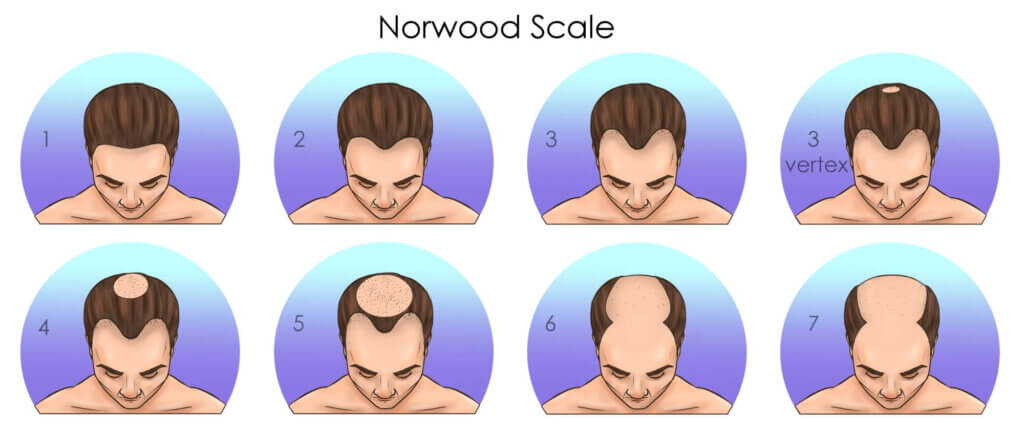
Which pattern are you noticing?
A receding hairline or gradual crown thinning may suggest pattern hair loss. Diffuse shedding can follow illness, stress or other triggers, while patches, scaling or scalp pain may require a different assessment. The same cosmetic concern can have several causes, so a treatment should not be chosen from photographs alone.

What helps an assessment?
Note when the change began, whether it was gradual or sudden, and any scalp symptoms. Bring information about health conditions, medication, recent illness, major weight changes, family history and previous treatments. A clinician may suggest blood tests or further investigation when the history and examination indicate a need.
Where does treatment start?
Treatment depends on the diagnosis. Medication can help some types of pattern loss, while an infection, deficiency or inflammatory condition needs an appropriate diagnosis and treatment plan. The types of hair loss guide explains why these distinctions matter.
When might surgery be considered?
A transplant redistributes existing donor follicles; it does not create an unlimited supply of new hair or treat every underlying cause. Suitability depends on the hair loss pattern, scalp health, donor capacity and expectations. Active or unexplained hair loss should be assessed before planning surgery.
Choose the next step, rather than the biggest package
If you are unsure where to start, read about hair loss assessment. If surgery has been proposed, discuss candidacy and donor planning. Prices and travel arrangements come after establishing whether treatment is appropriate.
When to seek prompt advice
Arrange medical assessment for sudden patches, persistent unexplained shedding or an inflamed, painful scalp. If symptoms develop after surgery, contact your surgical team. This guide is general reading and cannot diagnose the cause of an individual’s hair loss.