At a glance
Early healing and the final cosmetic result are different stages. Shedding can occur before new growth becomes visible, and the appearance develops over months. Follow your individual aftercare plan rather than judge the outcome from the first weeks.
The first weeks after transplantation are about care of the scalp. Visible growth develops later. The timing below is a general guide, not a date when every patient is ready for work, exercise or hair products.
What can patients expect after surgery?
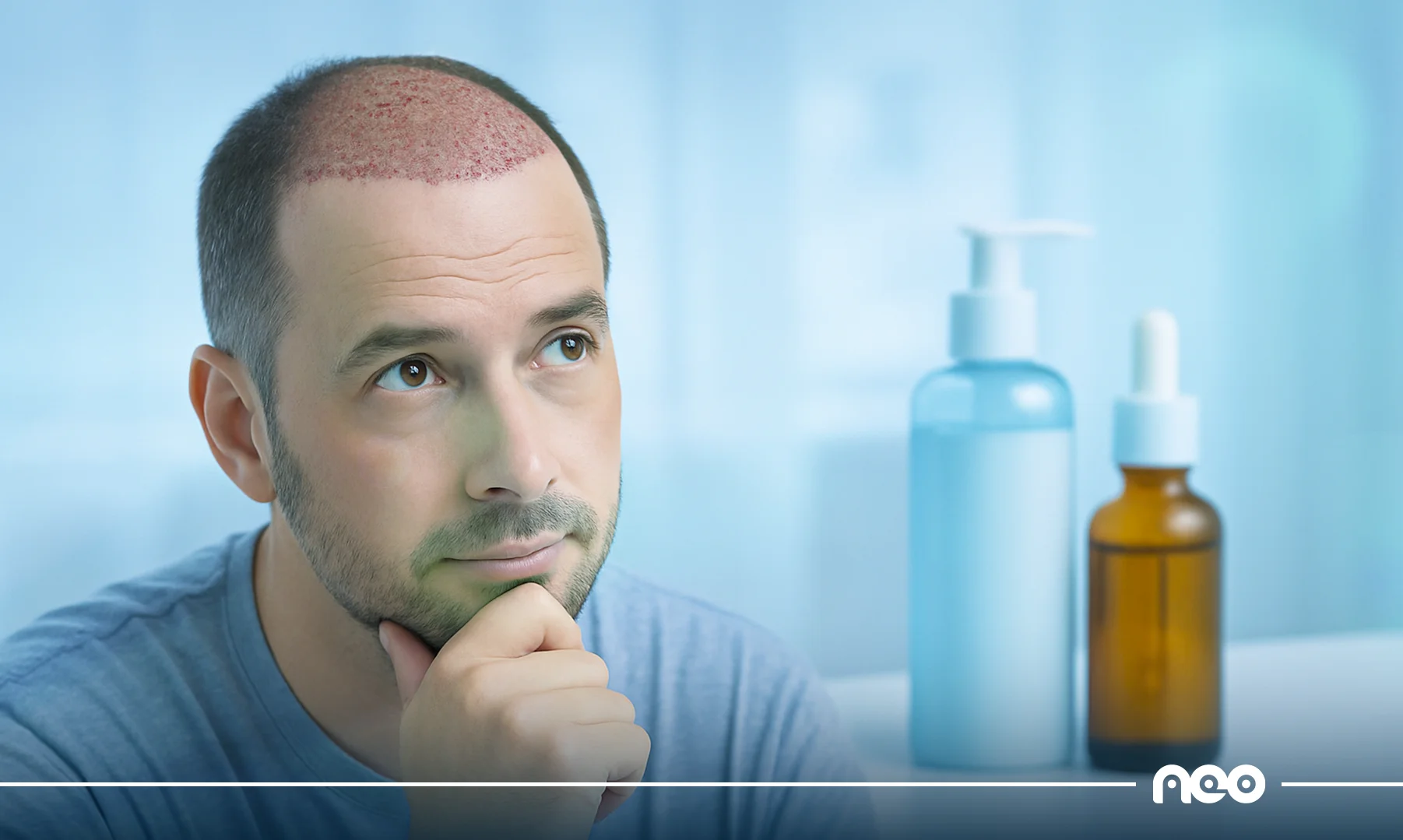
Temporary redness, swelling and scabbing can occur after a hair transplant. The team should explain how to look after the treated areas and which changes need attention. Do not judge the eventual coverage from the appearance in the first days.
Before leaving, ask for instructions you understand, a contact route for concerns and the dates or arrangements for review. Use only the products and medicines advised for your procedure.
Recovery timeline: healing, shedding and later growth
| Stage | What it describes |
|---|---|
| Early weeks | Scalp care and early healing. Follow your individual instructions for washing and activity. |
| Months 1–3 | Temporary shedding may occur. Shedding alone does not establish graft failure. |
| Months 3–18 | New growth and thickening develop gradually; progress varies. |
| Result review | The NHS describes full results at 10–18 months. Confirm your review schedule with the treating team. |
How should you organise aftercare?
Ask when and how to wash the scalp, what to do about headwear and sleeping, and when your usual activities can resume. Explain the demands of your work, travel and exercise routine so the advice addresses your actual situation.
A general article cannot clear you to use hair dye, resume heavy lifting or wear a tight helmet. Read the exercise questions and headwear guide to prepare for the discussion.
When should you contact the surgical team?
Contact the treating clinic promptly about severe pain or unexpected symptoms. Do not diagnose a problem from an online photograph or assume worsening symptoms are simply normal healing. Ask how to obtain an assessment if you are no longer near the clinic.
Temporary shedding and slow visible growth are different from an acute symptom that needs attention. The shedding and graft-failure guide explains the distinction without predicting whether an individual graft has survived.
What should be confirmed before returning home?
Keep the written care plan and the contact details needed for follow-up. Ask how concerns are triaged, when photographs may be useful and when an in-person examination would be needed. A package should not leave these arrangements unclear.
Review the follow-up planning guide and the clinic's package details. Clinical care and the travel schedule should be planned together.
Does early shedding predict the final result?
No single early photograph or shedding episode can establish the final result. Compare progress at the agreed reviews and ask what the team is assessing. Surrounding hair may continue to thin, so the longer-term appearance also depends on changes beyond the transplanted area.